
Class 6 Literature Worksheet on Narrator vs Author

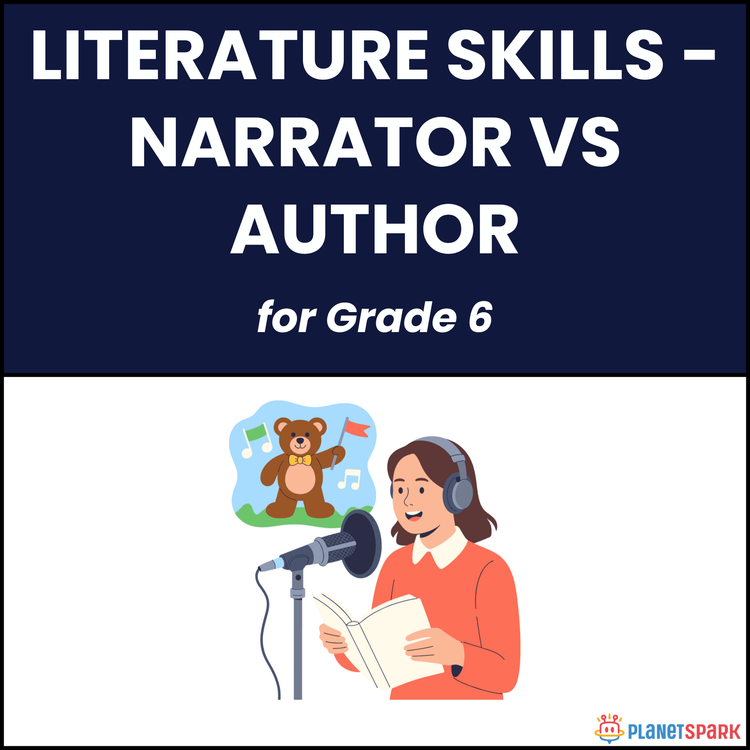
Class 6 Literature Worksheet on Narrator vs Author
Literature Skills - Narrator vs Author: A Grade 6 Grammar Worksheet
Topic: Narrator vs Author
Grade Level: 6
Grammar Focus: Understanding the roles of the narrator and the author in a story
Task Types:
Multiple Choice Questions
Fill in the Blanks
True/False Statements
Underlining Repeated Nouns
Paragraph Writing
This worksheet is designed to help Grade 6 students distinguish between the roles of the narrator and the author in literature. Through engaging exercises, students will understand that the narrator may be a character within the story, while the author stays outside the narrative and shapes the plot and themes. This will enhance students' comprehension and narrative analysis skills.
Answer Key (For Parents & Educators)
Exercise 1 - Choose the correct idea about narrator and author roles (10 questions):
1.b) The voice belongs to a character inside the story.
2.b) The author who designs the plot and 3.conclusion.
3.a) The narrator who conveys emotions from the character’s perspective.
4.b) The author who shapes the events but remains outside of them.
5.a) The voice inside the story providing a personal view.
6.a) The author who crafts the central theme and message of the story.
7.b) The character inside the story recounting an event.
8.b) The author who designs the events from an external point of view.
9.a) The narrator presenting the events from a character’s point of view.
10.b) The author who establishes the world and its characters.
Exercise 2 - Fill in the Blanks:
1.narrator
2.outside
3.character
4.writer
5.within
6.real
7.first
8.readers
9.plot
10.all
Exercise 3 - True/False Statements:
1.True
2.True
3.False
4.True
5.False
6.True
7.False
8.True
9.True
10.False
Exercise 4 -Underline the words or phrases that help you identify whether the sentence refers to the storyteller voice or the real writer.:
1.“I walked through the market”
2.“designed the plot”
3.“A character tells the events”
4.“creator of the book”
5.“voice that knows only some details”
6.“wrote the book”
7.“voice shares thoughts and feelings”
8.“person behind the book”
9.“experienced by someone in the story”
10.“writer of the text”
Exercise 5 - Fill the blanks in the paragraph below:
In a school library in Mumbai, the teacher explains that the narrator is the voice of the story while the author shows the real writer behind it. Students understand that the narrator may sometimes be a character inside the story, but the author always remains outside the events. During English class, the teacher explains that narration helps readers follow the plot clearly. The students discuss examples from stories where the narrator speaks in first person and shares experiences directly. They learn that the author builds characters, setting, and theme carefully. Later, they compare different books where the narrator may or may not be involved in the action. Finally, they discuss how understanding this difference improves reading skills and comprehension.
Help your child understand the vital difference between the narrator and the author!
Book a free trial!
Frequently Asked Questions
The author is the real person who writes the story, while the narrator is the voice or character telling the story within the text.
Students may think the storyteller is the writer, but the narrator can be a fictional voice created by the author.
Learners can look for clues like first-person or third-person point of view to understand who is telling the story.